
PwC Startup
PwC Startup
Reinvent Corporate Business Models to survive the next decade and become future proof
Why this Challenge?
Building trust in society and solving important problems.
With offices in 149 countries and more than 370,000 people, we are among the leading professional services networks in the world.
We help organisations and individuals create the value they are looking for, by delivering quality in Assurance, Tax and Advisory services.
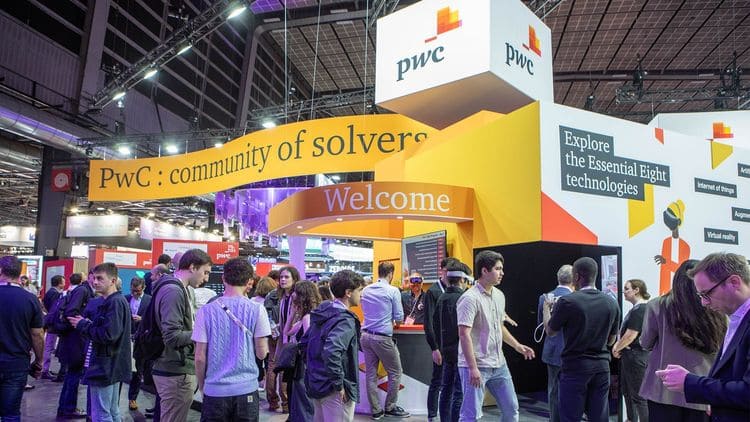


The Startup Challenge
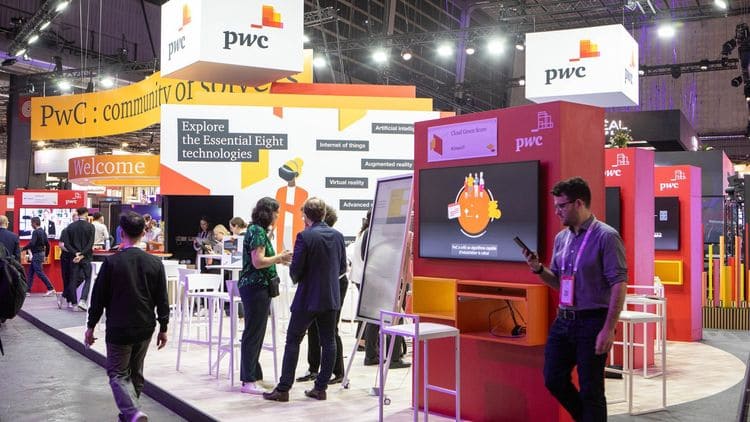
Reinvent Corporate Business Models
The megatrends and innovations from startups are reshaping industries and urge to create new business models. Companies that can adapt to these changes and leverage these innovations will be well-positioned for future success.
Context & Need: If your Startup provides an innovative solution or technology helping companies to improve, transform and reimagine how they create, deliver and capture value to become future proof, you will be more than welcome to apply to this challenge.
More info:
Competitive pressure and customer preferences quickly change, Companies are faced with the urgent need to explore how they will generate revenue and make money differently.
· 50% decrease in average age of S&P 500 companies compared to 1980 (from 37 years back then to 17 years today).
· 52% of companies on the Fortune 500 since 2000 have gone bankrupt, been acquired, or ceased to exist.
· 68% of French CEOs believe their company will not be viable in ten years unless it changes course
(PwC’s 28th Annual Global CEO Survey)
Business model reinvention (BMR) involves a fundamental rethinking and restructuring of how a company creates, delivers and captures value. It goes beyond making incremental changes and improvements to existing processes and strategies.
It’s how a company fundamentally overhauls the core elements that drive its business, including value proposition, its profit formula, capabilities, process and resources.
BMR by PwC: https://www.youtube.com/watch?v=RWKPBtb6S3E&t=65s
Climate Action and Energy Transition
Megatrend: Tackling climate change, adopting sustainable practices and transitioning to renewable energy sources.
Innovations: Renewable energy technologies, carbon capture, and circular economies.
Impacted Industries:
• Energy: Innovating in clean energy.
• Manufacturing: Adoption of sustainable materials and processes.
• Automotive: Shift towards electric vehicles and sustainable mobility solutions.
• Utilities: Integration of renewable energy into the grid.
Generative AI and Automation
Megatrend: The rise of AI and automation in various sectors.
Innovations: AI-powered applications (Agent), robotics, and machine learning.
Impacted Industries:
• Healthcare: AI to create medical notes from doctor-patient conversations.
• Manufacturing: Use of AI for predictive maintenance and quality control.
• Finance: AI-driven financial services and fraud detection.
Personalization and Customer Experience
Megatrend: Increasing demand for personalized experiences.
Innovations: Data analytics, AI-driven personalization, and customer engagement tools.
Impacted Industries:
• Retail: Personalized shopping experiences and targeted marketing.
• Entertainment: Personalized content recommendations and streaming services.
• Hospitality: Customized travel and accommodation experiences.
Other interesting trends could also be: Rapid Urbanization, Smart Cities and Future of Mobility, Demographic Shifts and Aging Population, Digital Transformation and Connectivity, Health and Wellness, Blockchain and Decentralization (DeFI), Etc.
For Corporates to adapt to these changes and leverage innovation they need to:
1. Understand their business environment:
• Focus on customers and how and where their needs are changing.
• Understand the underlying megatrends and “triggers” that might catalyze innovation and how to leverage it.
• Be prepared for a world where external collaboration is a competitive necessity.
To what extent does your solution provide insights and knowledge and/or competitive advantage in these areas for Corporates?
2. Understand their capabilities, and blockers:
• Identify and harness the underlying business capabilities you need activate the model you’re building.
• Foster innovative culture to deepen employee engagement.
• Identify company skills gaps
How do your solutions help Corporates to understand their strength and weaknesses and how do you help to improve the situation?
3. Transform decisions to actions:
Iterate, test, and learn using MVPs to understand impact of new designs
• Everything as a Service
• Connected physical products
• Digital products
• Ecosystems
• Channel disintermediation
• Value chain shifts
Does your technology/solution facilitate and/or accelerate the evaluation of such designs in the Corporate environment to measure impact?

Reinvent Corporate Business Models
The megatrends and innovations from startups are reshaping industries and urge to create new business models. Companies that can adapt to these changes and leverage these innovations will be well-positioned for future success.
Context & Need: If your Startup provides an innovative solution or technology helping companies to improve, transform and reimagine how they create, deliver and capture value to become future proof, you will be more than welcome to apply to this challenge.
More info:
Competitive pressure and customer preferences quickly change, Companies are faced with the urgent need to explore how they will generate revenue and make money differently.
· 50% decrease in average age of S&P 500 companies compared to 1980 (from 37 years back then to 17 years today).
· 52% of companies on the Fortune 500 since 2000 have gone bankrupt, been acquired, or ceased to exist.
· 68% of French CEOs believe their company will not be viable in ten years unless it changes course
(PwC’s 28th Annual Global CEO Survey)
Business model reinvention (BMR) involves a fundamental rethinking and restructuring of how a company creates, delivers and captures value. It goes beyond making incremental changes and improvements to existing processes and strategies.
It’s how a company fundamentally overhauls the core elements that drive its business, including value proposition, its profit formula, capabilities, process and resources.
BMR by PwC: https://www.youtube.com/watch?v=RWKPBtb6S3E&t=65s
Climate Action and Energy Transition
Megatrend: Tackling climate change, adopting sustainable practices and transitioning to renewable energy sources.
Innovations: Renewable energy technologies, carbon capture, and circular economies.
Impacted Industries:
• Energy: Innovating in clean energy.
• Manufacturing: Adoption of sustainable materials and processes.
• Automotive: Shift towards electric vehicles and sustainable mobility solutions.
• Utilities: Integration of renewable energy into the grid.
Generative AI and Automation
Megatrend: The rise of AI and automation in various sectors.
Innovations: AI-powered applications (Agent), robotics, and machine learning.
Impacted Industries:
• Healthcare: AI to create medical notes from doctor-patient conversations.
• Manufacturing: Use of AI for predictive maintenance and quality control.
• Finance: AI-driven financial services and fraud detection.
Personalization and Customer Experience
Megatrend: Increasing demand for personalized experiences.
Innovations: Data analytics, AI-driven personalization, and customer engagement tools.
Impacted Industries:
• Retail: Personalized shopping experiences and targeted marketing.
• Entertainment: Personalized content recommendations and streaming services.
• Hospitality: Customized travel and accommodation experiences.
Other interesting trends could also be: Rapid Urbanization, Smart Cities and Future of Mobility, Demographic Shifts and Aging Population, Digital Transformation and Connectivity, Health and Wellness, Blockchain and Decentralization (DeFI), Etc.
For Corporates to adapt to these changes and leverage innovation they need to:
1. Understand their business environment:
• Focus on customers and how and where their needs are changing.
• Understand the underlying megatrends and “triggers” that might catalyze innovation and how to leverage it.
• Be prepared for a world where external collaboration is a competitive necessity.
To what extent does your solution provide insights and knowledge and/or competitive advantage in these areas for Corporates?
2. Understand their capabilities, and blockers:
• Identify and harness the underlying business capabilities you need activate the model you’re building.
• Foster innovative culture to deepen employee engagement.
• Identify company skills gaps
How do your solutions help Corporates to understand their strength and weaknesses and how do you help to improve the situation?
3. Transform decisions to actions:
Iterate, test, and learn using MVPs to understand impact of new designs
• Everything as a Service
• Connected physical products
• Digital products
• Ecosystems
• Channel disintermediation
• Value chain shifts
Does your technology/solution facilitate and/or accelerate the evaluation of such designs in the Corporate environment to measure impact?

Reinvent Corporate Business Models
The megatrends and innovations from startups are reshaping industries and urge to create new business models. Companies that can adapt to these changes and leverage these innovations will be well-positioned for future success.
Context & Need: If your Startup provides an innovative solution or technology helping companies to improve, transform and reimagine how they create, deliver and capture value to become future proof, you will be more than welcome to apply to this challenge.
More info:
Competitive pressure and customer preferences quickly change, Companies are faced with the urgent need to explore how they will generate revenue and make money differently.
· 50% decrease in average age of S&P 500 companies compared to 1980 (from 37 years back then to 17 years today).
· 52% of companies on the Fortune 500 since 2000 have gone bankrupt, been acquired, or ceased to exist.
· 68% of French CEOs believe their company will not be viable in ten years unless it changes course
(PwC’s 28th Annual Global CEO Survey)
Business model reinvention (BMR) involves a fundamental rethinking and restructuring of how a company creates, delivers and captures value. It goes beyond making incremental changes and improvements to existing processes and strategies.
It’s how a company fundamentally overhauls the core elements that drive its business, including value proposition, its profit formula, capabilities, process and resources.
BMR by PwC: https://www.youtube.com/watch?v=RWKPBtb6S3E&t=65s
Climate Action and Energy Transition
Megatrend: Tackling climate change, adopting sustainable practices and transitioning to renewable energy sources.
Innovations: Renewable energy technologies, carbon capture, and circular economies.
Impacted Industries:
• Energy: Innovating in clean energy.
• Manufacturing: Adoption of sustainable materials and processes.
• Automotive: Shift towards electric vehicles and sustainable mobility solutions.
• Utilities: Integration of renewable energy into the grid.
Generative AI and Automation
Megatrend: The rise of AI and automation in various sectors.
Innovations: AI-powered applications (Agent), robotics, and machine learning.
Impacted Industries:
• Healthcare: AI to create medical notes from doctor-patient conversations.
• Manufacturing: Use of AI for predictive maintenance and quality control.
• Finance: AI-driven financial services and fraud detection.
Personalization and Customer Experience
Megatrend: Increasing demand for personalized experiences.
Innovations: Data analytics, AI-driven personalization, and customer engagement tools.
Impacted Industries:
• Retail: Personalized shopping experiences and targeted marketing.
• Entertainment: Personalized content recommendations and streaming services.
• Hospitality: Customized travel and accommodation experiences.
Other interesting trends could also be: Rapid Urbanization, Smart Cities and Future of Mobility, Demographic Shifts and Aging Population, Digital Transformation and Connectivity, Health and Wellness, Blockchain and Decentralization (DeFI), Etc.
For Corporates to adapt to these changes and leverage innovation they need to:
1. Understand their business environment:
• Focus on customers and how and where their needs are changing.
• Understand the underlying megatrends and “triggers” that might catalyze innovation and how to leverage it.
• Be prepared for a world where external collaboration is a competitive necessity.
To what extent does your solution provide insights and knowledge and/or competitive advantage in these areas for Corporates?
2. Understand their capabilities, and blockers:
• Identify and harness the underlying business capabilities you need activate the model you’re building.
• Foster innovative culture to deepen employee engagement.
• Identify company skills gaps
How do your solutions help Corporates to understand their strength and weaknesses and how do you help to improve the situation?
3. Transform decisions to actions:
Iterate, test, and learn using MVPs to understand impact of new designs
• Everything as a Service
• Connected physical products
• Digital products
• Ecosystems
• Channel disintermediation
• Value chain shifts
Does your technology/solution facilitate and/or accelerate the evaluation of such designs in the Corporate environment to measure impact?
Eligibility Criteria
★ Geography: EMEA & US.


Selection Criteria
Value proposition
The startup value proposition should fit at least one of the 3 pillars of the challenge presented.
Regulation compliance, security by design
They are key components to be able to fit in the Corporate’s organization and must be at the heart of the solution.
Business potential
The business potential with PwC business lines and/or with our clients’ issues.
Maturity
Post-MVP stage to growth and scale-up with at least 2 existing clients in their portfolio.
Technology
Deep tech and low tech will be considered.
Global Scale operation
The potential to operate at a global scale.
Rewards


Vivatech with PwC
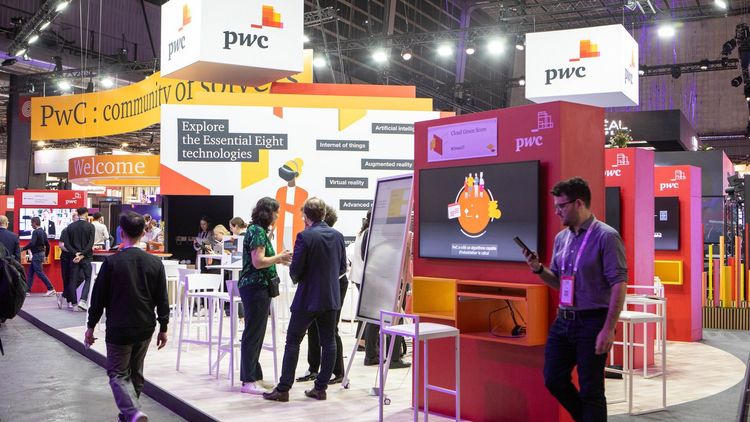
Presence within our PwC Booth @Vivatech 2025 (at least 1 day)

Talk with PwC
Possibility to participate to a talk with a client and a PwC expert (Business days).

Brainstorm with PwC
One session (2h) with the PwC Studio to brainstorm and challenge the business model of the winner (if applicable).
Play an active role in our six business sectors
Your solution, product or service demonstrates that you can play an active role in LVMH's ecosystem and deliver on a large scale. Whether it be the creation process, the omnichannel customer journey, or operation and manufacturing, you support the Group's legacy of excellence and innovation in all areas of its 6 business sectors.

Fashion & Leather Goods

Wines & Spirits

Perfumes & Cosmetics

Watches & Jewelry

Other Activities

Selective Retailing
Timeline
00:00:00:00
left to apply
left to apply
10/02/2025
Applications open
23/03/2025
Applications close
14/04/2025
The winners are announced
11/06/2025
-
20/06/2026
9th edition of VivaTech
FAQ
Who can apply?
Can I apply for more than one Startup Challenge/Award?
What is the difference between a Startup Challenge and an Award?
Is applying for an Award or Startup Challenge free?
Who can apply?
Can I apply for more than one Startup Challenge/Award?
What is the difference between a Startup Challenge and an Award?
Is applying for an Award or Startup Challenge free?
Who can apply?
Can I apply for more than one Startup Challenge/Award?
What is the difference between a Startup Challenge and an Award?
Is applying for an Award or Startup Challenge free?